Surgical Technology
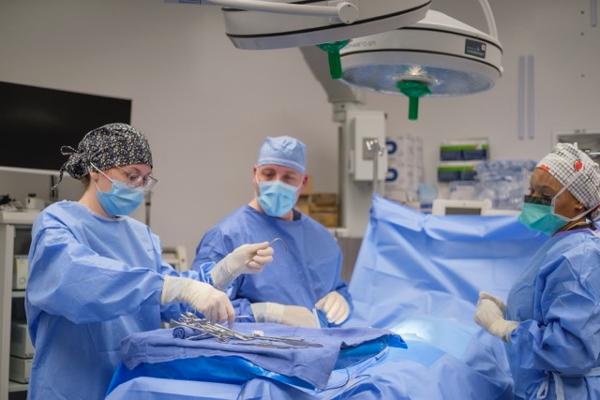 Associate Degree
Apply to a Health Sciences Program
Program Links
Health Sciences Links
**Due to high demand, enrollment is limited. Please consult your academic advisor for next available seating in this program and other possible opportunities.**
***Effective Fall 2026, MAT 155 Contemporary Mathematics will be the required Math course for the Surgical Technology Program. Please contact your Surgical Technology Academic Advisor for questions or concerns.***
The Surgical Technology program is accredited by the Commission on Accreditation of Allied Health Education Programs (www.caahep.org) upon the recommendation of the Accreditation Review Council on Education in Surgical Technology and Surgical Assisting.
The goal of this program is “To prepare entry-level surgical technologists who are competent in the cognitive (knowledge), psychomotor (skills), and affective (behavior) learning domains to enter the profession.”
The student will develop the knowledge, skills and attitudes necessary to practice as a certified surgical technologist by acquiring fundamental capabilities. Upon completion of the program the graduate surgical technologist shall:
- Assimilate knowledge of human anatomy, physiology, pathophysiology, microbiology and pharmacology into clinical practice as an entry-level surgical technologist. (Cognitive)
- Demonstrate competency in surgical aseptic techniques and clinical judgement in the perioperative setting. (Psychomotor)
- Apply best practice regarding patient safety during perioperative routines, patient transportation, positioning and emergency procedures. (Psychomotor)
- Demonstrate the knowledge and understanding of standards of practice in the use of medications and anesthetic agents during perioperative experiences. (Psychomotor)
- Demonstrate effective communication skills essential to work collaboratively with the surgical team and interact professionally with patients. (Psychomotor)
- Possess the knowledge and skills required to successfully pass the NBSTSA National Certification Exam. (Affective)
- Perform competently as an entry-level surgical technologist in the cognitive, psychomotor and affective learning domains. (Affective)
| Program Outcomes | 2025 | 2026 | 2027 |
|---|---|---|---|
| NBSTSA First-Time Pass Rate | 80% | 71.4% | % |
| NBSTSA Ultimate Pass Rate | 90% | 85.7% | % |
| Graduation Rate | 59% | 58% | % |
| Employment Rate | 100% | 71.4% | % |
Students enrolled in the Surgical Technology program must meet essential technical standards to successfully complete all phases of the program and meet industry expectations. To ensure readiness, students may be required to demonstrate the ability to perform these essential functions:
| Critical Thinking Skills |
|---|
Standards:
|
Example:
|
| Mobility/Motor Skills |
Standards:
|
Example:
|
| Tactile Skills |
Standards:
|
Example:
|
| Auditory Skills |
Standards:
|
| Visual Skills |
Standards:
|
Example:
|
| Communication Skills |
Standards:
|
Example:
|
| Interpersonal Skills |
Standards:
|
| Behavioral Skills |
Standards:
|
Example:
|
COVID-19 vaccines as well as other vaccines/immunizations/titers may be required for some health sciences programs in order to attend clinicals. Should immunizations and titers be required by a clinical affiliate and the student refuses to obtain the vaccines/immunizations/titers, this may impact the student’s ability to be assigned to certain clinical rotations, which may in turn impact the student’s ability to continue in the program.